·Brian C JensenAI ProctoringBrian C JensenExam IntegrityRemote Exams
AI and Remote Proctoring: The Future of Exams
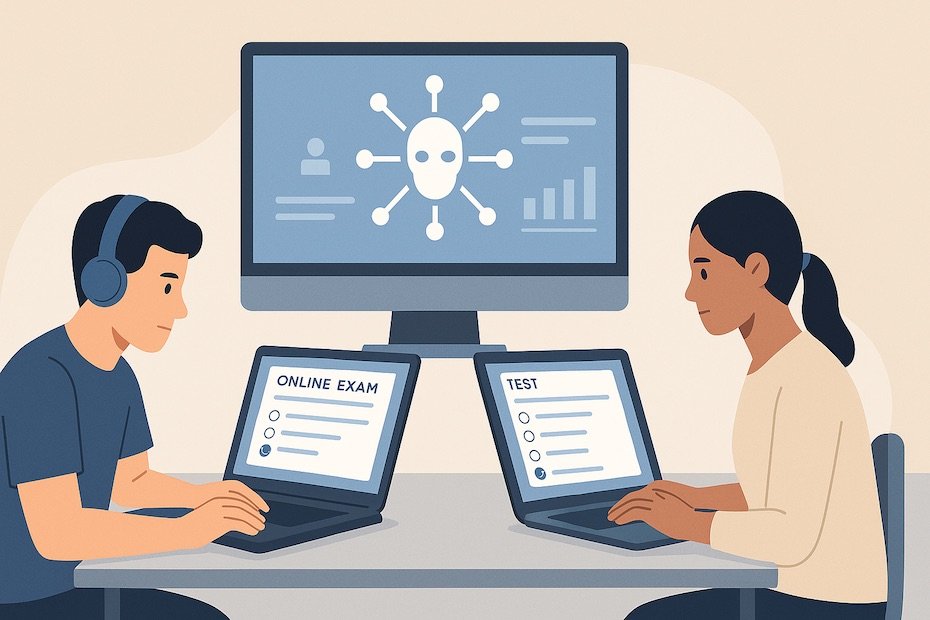
AI remote proctoring is transforming the future of exams by enabling secure, scalable online assessments while raising valid concerns about fairness, privacy, and student experience.
As a student, educator, or administrator, you now face a testing environment increasingly driven by AI oversight. In this article, you’ll learn how these systems work, why institutions adopt them, what challenges exist, and how future strategies will balance integrity with trust.
What is AI remote proctoring?
AI remote proctoring refers to the use of artificial intelligence to monitor students during online exams. These systems track activity through webcams, microphones, and screen captures.
They are designed to detect suspicious behaviors such as looking away from the screen frequently, the presence of multiple faces, or unusual background noise. AI alerts can then be reviewed by human proctors for verification.
This model offers institutions a scalable alternative to traditional in-person invigilation, making exams accessible globally while maintaining academic integrity.
How does AI improve exam security and fairness?
AI enhances exam security by adding multiple verification layers. Identity confirmation through biometrics prevents impersonation, while screen lock features block switching between tabs or browsers.
Behavioral analytics, like eye movement and keystroke tracking, allow the system to flag anomalies in real-time. These safeguards reduce opportunities for dishonesty and help uphold consistent standards across different student groups.
At scale, this means universities and certification providers can manage thousands of exam takers simultaneously, ensuring fairness in access and evaluation.
Why do many students prefer AI monitoring?
Surprisingly, surveys show many students prefer AI proctoring to live invigilators. The reason is simple—flexibility, lower costs, and convenience.
With AI-based solutions, you can take an exam from home, at a time that fits your schedule. This eliminates travel expenses and logistical stress, particularly for international or working students.
For some, the idea of being observed by a computer feels less intrusive than having a live proctor watching on video. While not universally accepted, the accessibility and control AI provides make it appealing to a majority of online learners.
What real-world examples show AI proctoring in action?
At Deakin University in Australia, students log into their exams, validate identity with a photo ID, lock their browser, and complete tests under AI supervision. The system monitors facial orientation and surroundings, flagging anything unusual.
Meanwhile, the University of South Australia has incorporated oral exams alongside AI monitoring. By requiring short viva sessions, educators can confirm comprehension beyond automated detection tools.
Other global institutions, such as major U.S. testing boards, have also turned to AI to replace or supplement human oversight, particularly during large-scale certification exams.
What are the downsides of AI proctoring?
Despite its benefits, AI proctoring raises ethical and technical challenges.
Students report anxiety over being constantly watched, especially when natural movements trigger false alerts. Technical glitches—like poor internet connection or system crashes—add to exam-day stress.
Bias is another serious concern. Some tools have misidentified students with darker skin tones or failed to adjust for neurodiverse behavior, leading to unfair outcomes. Privacy risks also persist, as room scans and data collection raise questions about security and consent.
How are institutions addressing fairness and trust?
Forward-thinking institutions are moving toward hybrid models—where AI flags potential issues, but humans make final judgment calls. This reduces false positives and restores trust.
Transparency is equally important. Students must know how data is collected, stored, and used, with assurances that systems comply with strict privacy regulations like GDPR.
Alternative assessments—such as project-based exams, open-book testing, or oral evaluations—are also emerging as complementary methods to reduce over-reliance on AI surveillance.
What role will AI play in the future of exams?
The next generation of AI proctoring tools will extend beyond simple monitoring. Expect features like emotion detection, voice recognition, and advanced behavioral analysis.
Blockchain integration may secure exam records and identities, ensuring results are tamper-proof. AI-driven dashboards will give educators actionable insights into student performance trends, not just security alerts.
Ultimately, the future points to hybrid exam models where AI provides scale and efficiency, but human oversight ensures fairness, empathy, and accountability.
Key Takeaways on AI and Remote Proctoring
- AI remote proctoring enables secure, large-scale online testing
- Students value flexibility, accessibility, and reduced costs
- Ethical concerns include bias, privacy, and anxiety
- Hybrid models blend AI efficiency with human judgment
- Transparency and fairness are essential for adoption
In Conclusion
AI and remote proctoring represent a major shift in how exams are delivered and supervised. For you as a student or leader, the opportunity lies in balancing integrity with empathy—using AI to scale assessments while ensuring fairness and trust remain central. As technology evolves, the institutions that succeed will be those that adopt hybrid models, maintain transparency, and continuously adapt their testing methods to meet both academic standards and human needs.
For more of my insights on strategic management and professional growth, you can find me on Medium
Originally published on WordPress: https://briancjensenscholarship.com/ai-and-remote-proctoring-the-future-of-exams/


